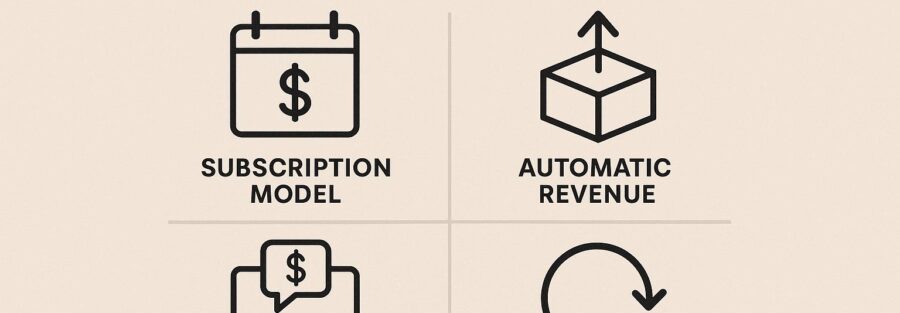
9 Traits of Businesses With Strong Recurring Revenue
Struggling to build reliable revenue in a fast-changing AI and SaaS world? It’s a common challenge—even for teams with great products or services. Predictable cash flow, high customer retention, and consistent growth all hinge on one thing: mastering the traits of recurring revenue businesses. Whether you run an AI-powered SaaS platform, an agency, or a digital product company, understanding these traits can help you design a more resilient, scalable business model.
Why Recurring Revenue Matters in AI and Productivity
Subscription models are more than a trend. They create stability and fuel innovation, especially in industries where customer needs evolve rapidly—like AI and productivity tools. But not all recurring revenue is created equal. The most durable businesses share several key qualities that set them apart.
9 Traits of Recurring Revenue Businesses
- Clear Value Proposition
Customers know exactly what they’re getting and why it’s worth a monthly fee. Take Zendesk—their support platform’s benefits are clear from the first click. - Strong Customer Onboarding
A seamless onboarding process helps users see value fast, reducing churn and boosting satisfaction. - Low Friction Payment Systems
Simplified billing and multiple payment options make it easy for customers to stay subscribed. - Consistent Engagement & Communication
Regular updates, check-ins, and proactive support keep your product top of mind and customers loyal. - Flexible, Tiered Pricing
Offering different plans lets clients scale with you—see how Salesforce tailors options for every business size. - Data-Driven Decision Making
The best recurring revenue businesses analyze usage patterns to optimize features and address churn risks proactively. - Customer-Centric Feedback Loops
Gathering and acting on user feedback ensures your offering stays relevant and valuable. - Automated, Personalized Prompts
Smart prompts and AI-powered notifications guide users, boost engagement, and foster habit-building (see Prompt Engineering Best Practices). - Focus on Lifetime Value
Successful companies prioritize long-term relationships over short-term sales—measuring success by customer lifetime value (LTV), not just new signups.
Quick Checklist: Building Recurring Revenue Strength
- Communicate clear, ongoing value
- Streamline onboarding and billing
- Engage customers with relevant prompts and education
- Offer flexible pricing that grows with user needs
- Continuously improve via data and feedback
FAQ: Traits of Recurring Revenue Businesses
- What is recurring revenue, and why is it valuable?
- Recurring revenue is income generated regularly from ongoing customer relationships (like subscriptions). It creates predictable cash flow and supports business growth.
- How do AI tools impact recurring revenue models?
- AI can personalize user experiences, automate engagement prompts, and identify churn risks—boosting retention and revenue. Learn more in our AI & Productivity Insights.
- What’s the difference between recurring and repeat revenue?
- Recurring revenue comes from automatic, scheduled payments (e.g., subscriptions). Repeat revenue depends on customers making individual purchases repeatedly, but not on a fixed schedule.
- How can prompt engineering improve customer retention?
- Well-crafted prompts can guide users to discover value faster, foster habits, and reduce churn. Explore actionable frameworks in our Prompt Engineering Frameworks resource.
- What metrics should I track to strengthen recurring revenue?
- Monitor churn rate, customer lifetime value, monthly recurring revenue (MRR), and engagement metrics for a holistic view of your business health.
Ready to Build a More Resilient Business?
Mastering these nine traits is your roadmap to stronger, more sustainable recurring revenue. For expert guidance on prompt engineering, AI productivity strategies, or building a future-proof recurring revenue model, connect with EJ Bowen—your trusted partner in business growth.