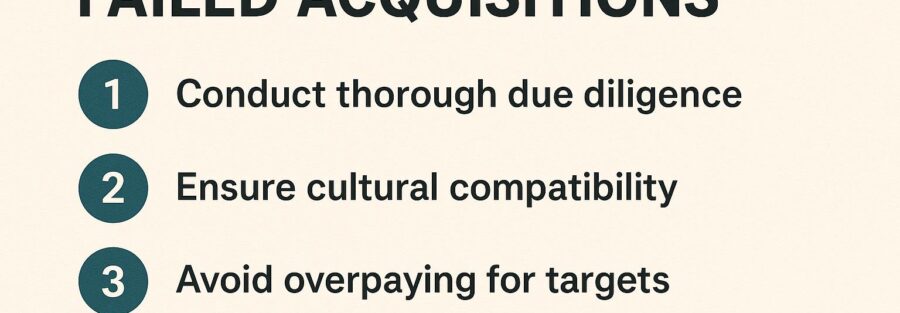
Top 7 Lessons From Failed Business Acquisitions
Acquisitions can be a powerful growth strategy—especially in tech and SaaS. But, as many founders and executives have learned the hard way, not every deal is a win. Failed acquisitions don’t just cost money; they can derail momentum, damage culture, and distract from core business goals. If you’re navigating M&A or eyeing a potential deal, learning from others’ missteps can help you avoid costly pitfalls—saving time, resources, and team morale.
Let’s break down the most impactful lessons from failed acquisitions and uncover how you can use AI-powered prompt engineering to streamline due diligence, boost productivity, and set your next deal up for success.
1. Align on Vision—Or Risk Fragmentation
Many failed acquisitions stem from a mismatch in vision or culture. Before the deal, use targeted prompts to surface differences in leadership style, mission, or product direction. For example, ask AI tools to compare company values, and flag gaps early.
- Prompt: “List the top 5 cultural values of Company X and Company Y. Highlight any conflicts or misalignments.”
- Framework: Use the Eisenhower Matrix to prioritize integration challenges by urgency and importance.
2. Don’t Shortcut Due Diligence
Rushing diligence is a common thread in failed deals. With AI, automate document review and risk flagging. Utilize strategic prompts to summarize contracts, financials, and customer data, ensuring nothing slips through the cracks.
- Prompt: “Summarize key financial risks in this due diligence packet.”
- Best Practice: Assign a dedicated diligence team with clear prompt templates for each review area.
3. Prioritize Tech Compatibility
Technical debt and incompatible stacks have sunk many SaaS acquisitions. Before signing, prompt your AI to audit product architectures and integration requirements. This ensures smoother post-merger operations.
- Checklist: Codebase compatibility, API documentation, data migration pathways.
4. Protect Talent and Culture
Loss of key employees is a fast track to value destruction. Use prompts to identify retention risks and surface team sentiment. Plan early for onboarding and communication strategies.
- Prompt: “Analyze exit interview data for trends in team satisfaction and retention risks.”
5. Communicate Transparently—Early and Often
Poor communication causes confusion and erodes trust. AI can help you automate and personalize updates to all stakeholders. Set up prompt-driven FAQs and response templates to handle common concerns quickly.
6. Validate Synergies—Don’t Assume Them
Assumed synergies that never materialize are a recurring theme in failed deals. Leverage AI to model realistic integration scenarios and stress-test your assumptions before moving forward.
7. Plan for the Unexpected
Every acquisition has surprises. Build flexibility into your integration plan, and use AI-driven scenario planning to prepare for contingencies.
Quick Reference: Acquisition Success Checklist
| Area | Prompt/Action |
|---|---|
| Culture | Compare values, leadership, and goals |
| Tech | Audit stack and integration needs |
| Diligence | Summarize contracts, risks, and finances |
| People | Spot retention risks, plan onboarding |
For more productivity frameworks and AI prompt strategies, explore the EJ Bowen Blog and our consulting services.
FAQ: Lessons From Failed Acquisitions
- What are the most common reasons business acquisitions fail?
- Cultural misalignment, rushed due diligence, technical incompatibility, and poor communication are top causes. Read more from Harvard Business Review.
- How can AI help in the M&A process?
- AI streamlines diligence, identifies risks, and supports scenario planning, making acquisitions more efficient and informed.
- What is prompt engineering, and how does it apply to acquisitions?
- Prompt engineering is crafting targeted AI queries to extract insights. In acquisitions, it speeds up analysis and decision-making.
- How do you ensure tech compatibility in a SaaS acquisition?
- Use prompts to audit codebases, APIs, and integration points before closing the deal. This reduces post-merger friction.
- What should be included in a post-acquisition integration plan?
- Focus on culture, talent retention, tech integration, and regular communication. Build in flexibility for unexpected changes. See more at McKinsey.
Ready to level up your acquisition strategy or harness AI for smarter due diligence? Connect with EJ Bowen for tailored productivity and prompt engineering solutions.