


Years ago, in my early days of consulting, I was working with a client who had a classic business problem: their sales pipeline was a mess. Leads were getting lost, follow-ups were inconsistent, and no one could tell you with certainty where a deal stood. My immediate instinct was to dive in, fix the current list, and create a complicated, detailed spreadsheet to track everything.
I spent days on it. I built formulas, color-coded cells, and created intricate charts. I was so proud of my work—it was a beautiful solution to a painful, one-time problem. I presented it to my mentor, ready for a pat on the back. He looked at me, smiled, and delivered a piece of wisdom that has stuck with me ever since.
He said, “That’s a brilliant solution, but you’ve only solved the problem, not the process.”
That was it. That was the best consulting advice I’ve ever received. It was a simple idea that completely reframed how I approached every challenge, and it’s even more relevant today with the rise of AI.
It’s about understanding the difference between a one-off fix and a repeatable system. It’s about building a machine that runs smoothly on its own, instead of just putting out fires as they happen.
Why Process Trumps Problem-Solving Every Time
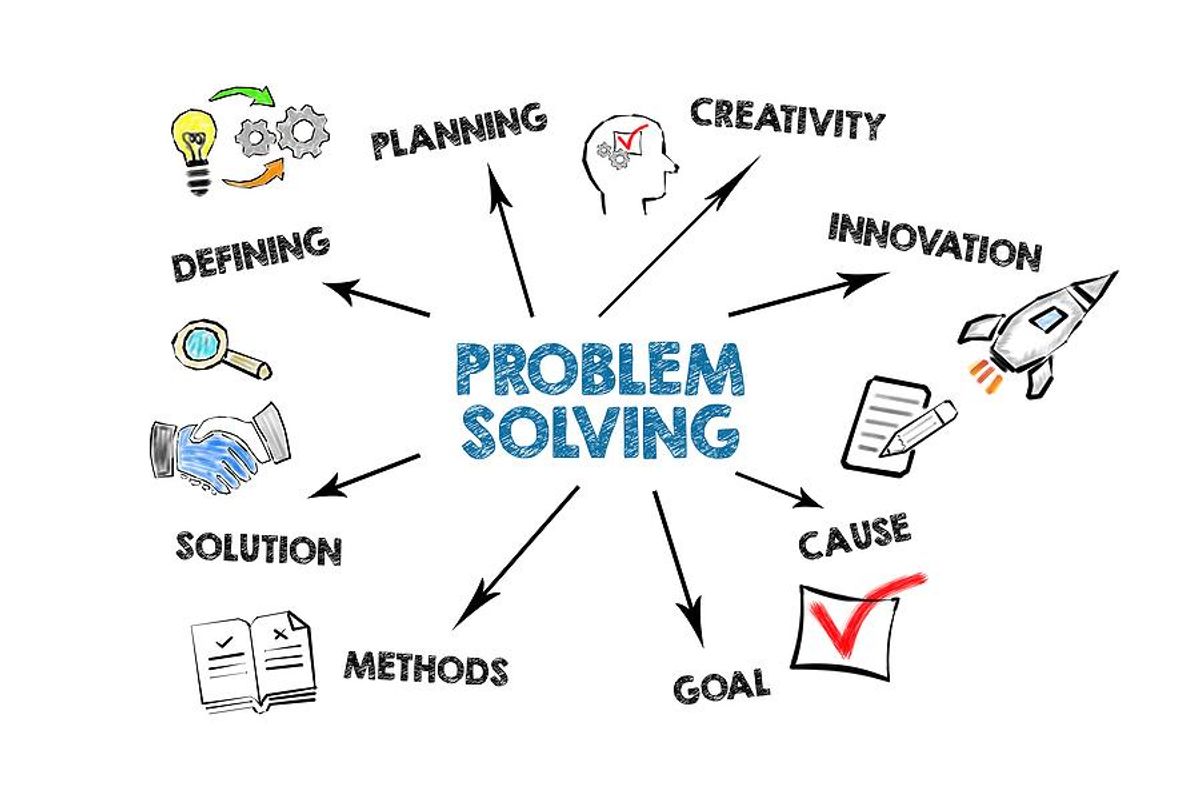
When you’re a busy professional or new business owner, it’s easy to get caught up in the urgency of a single issue. A client is angry, a report is late, or a system is broken. Your brain goes into “fix it” mode, and you jump straight to the solution. The problem is, that same problem will likely pop up again—maybe with a different client, a different report, or a different system.
Solving for the process, however, changes everything. It means you step back and ask:
- What created this problem?
- What is the root cause?
- How can we build a simple, repeatable system that prevents this from happening again?
This shift in thinking is the key to building a scalable business. You’re not just an operator; you’re a systems architect. You’re not just a fixer; you’re a founder. You’re not just reacting; you’re building a foundation for sustainable growth.
The Modern Way to Solve the Process: AI and Prompt Engineering

Now, here’s where this timeless wisdom gets a major 21st-century upgrade. AI and tools like My Magic Prompt are not just for generating content or answering quick questions. They are your new partners in building scalable processes.
A common mistake people make is using AI for one-off tasks. They’ll ask for a quick email draft or a list of ideas. That’s solving the problem. The true power of AI is unlocked when you use it to solve the process.
Example: The Sales Follow-Up Problem
- Problem-Solving Approach (The Old Way): You manually check your CRM, realize a lead hasn’t been followed up with, and draft a one-off email. It works for now, but it’s not repeatable.
- Process-Solving Approach (The New Way): You use a strategic AI prompt to create a complete follow-up workflow. You create a series of automated emails, a system for flagging unresponsive leads, and a template for personalized messages. You’re not just solving this one instance; you’re building a system that can handle every future lead.
This kind of strategic thinking is what we call prompt engineering, and it’s a game-changer. For a deeper dive into this, you can check out our comprehensive guide on prompt engineering.
How to Use AI to Solve Your Processes
Let’s get tactical. Here are three simple, actionable ways you can start using AI to build systems instead of just solving problems.
1. Creating a Standard Operating Procedure (SOP) from a Single Action
Instead of just doing a task, tell AI to help you document the process.
AI Prompt Example: “Act as a business process analyst. I need to create a simple Standard Operating Procedure (SOP) for a new virtual assistant. The task is to research and book my travel for a business trip. Draft a concise, step-by-step SOP that includes how to search for flights, book hotels, and get my final approval. The format should be a bulleted list.”
This turns a single task into a repeatable system that you can hand off to anyone.
2. Building a Project Plan Instead of a Simple To-Do List
Don’t just get a list of tasks. Get a full, strategic plan.
AI Prompt Example: “Act as a project manager. I am launching a new service and need a detailed 90-day project plan. The plan should include three phases: 1) Strategy & Planning (Days 1-30), 2) Execution (Days 31-60), and 3) Launch & Refinement (Days 61-90). The output should be a detailed, formatted plan with key milestones and responsible parties for each phase.”
This is the power of our Business Playbook—it provides a proven roadmap so you don’t have to start from scratch.
3. Turning Your Notes Into a Business Case
You have a great idea, but it’s scattered in your notebook. Don’t just get a summary. Get a complete, structured argument.
AI Prompt Example: “Act as a senior business consultant. I have a new business idea for a mobile app. My notes are a bit disorganized, but they include ideas for features, target audience, and monetization. Draft a persuasive business case for this app. The output should be a professional document that includes an Executive Summary, Market Opportunity, Competitive Analysis, and a Financial Projection summary. Include a section that highlights the potential for using AI to streamline operations.”
This is about turning raw information into a clear, compelling asset. This is a great way to use tools like My Magic Prompt.
As a recent article in the Harvard Business Review on the importance of process-driven work highlighted, focusing on the right workflows is far more effective than just fixing issues as they arise.
Your Questions, Answered: A Prompt Engineering FAQ
What’s the difference between a one-off prompt and a workflow prompt? A one-off prompt is a simple request for a single output. A workflow prompt is a series of interconnected commands designed to create a repeatable process or solution. It is strategic and often involves multiple steps.
How can I learn to write better prompts? Start by being specific. Define the role you want the AI to play (e.g., “Act as a marketing expert”), provide clear context, and specify the format of the output you want (e.g., “in a table,” “as a bulleted list”).
Is it worth it to document simple tasks? Absolutely. Documenting even the simplest tasks allows you to delegate them to a team member or a virtual assistant in the future. It’s the first step to scaling your business and getting your time back.
How can I organize my AI prompts? Create a simple system. You can use a document, a project management tool, or a dedicated prompt library. The goal is to make it easy to find and reuse your best prompts without reinventing the wheel every time.
Can AI replace my business consultant? No. AI is a powerful tool, but it’s not a replacement for a consultant’s strategic judgment, industry experience, and human insight. It’s a partner that helps a consultant (or you!) execute faster and more efficiently.
How can I know which frameworks to use for my business? There is no one-size-fits-all answer. The key is to start with your most pressing problem and find a framework that addresses it. You can even use AI to help you identify which framework is the best fit for your specific challenge.
Ready to Build Your Business with a Strategic Mindset?
The best consulting advice isn’t a secret trick or a complex formula—it’s a mindset. It’s about focusing on the systems and processes that will help your business run smoothly, even when you’re not there.
Ready to start building a smarter business? Check out My Magic Prompt and our library of other tools, templates, and solutions designed to simplify your work and make every business decision a little bit easier. It’s time to get your freedom back.

