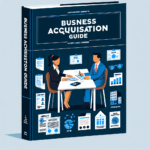
Why Buying a Business Is Often Safer Than Starting One
Discover why buying a business is often safer than starting one from scratch. Learn how existing revenue, proven systems, and an established customer base can help you build faster and smarter.
Introduction: The Productivity Problem of Starting from Scratch
Launching a new business is exhilarating—but let’s be real, it’s also loaded with unknowns. In the world of AI-driven productivity and prompt engineering, we always look for smarter ways to accelerate results. The same applies in entrepreneurship: why reinvent the wheel when you can start with momentum? This is where the debate of buying vs starting a business gets interesting.
What if you could skip the “0 to 1” grind and step into a business with cash flow, customers, and working systems? That’s what business acquisition offers. Let’s break down why it’s often the safer, smarter move—and how you can apply strategic thinking from prompt engineering to your business ventures.
Buying vs Starting a Business: Key Benefits of Acquisition
- Proven Revenue: Existing businesses have track records you can analyze. You’re not guessing if people want your product—you have data.
- Established Systems: From workflows to CRMs, processes are in place. This lets you focus on optimization, not creation.
- Loyal Customers: Acquisition gives you a real customer base to serve and learn from, instead of starting from zero.
- Faster ROI: With revenue on day one, you can reinvest and grow—much like iterating on a proven prompt instead of crafting from scratch.
In short, business acquisition benefits mirror the productivity hacks we use in AI: leverage what works, iterate, and scale.
Framework: The “Prompt Engineering” Approach to Business Acquisition
- Analyze the Inputs: Just like refining an AI prompt, dive deep into the business’s data—financials, customer reviews, and processes.
- Test and Iterate: Make small, strategic improvements. Focus on automation and systems that multiply your efforts.
- Leverage Existing Assets: Tap into the reputation, staff, and customer goodwill that come with the business.
- Optimize for Outcomes: Set clear productivity KPIs and use tools (including AI) to increase efficiency fast.
Real-World Examples
Consider SaaS founders who acquire niche platforms. Instead of building a new tool and hunting for product-market fit, they buy a platform with users, refine onboarding flows, and quickly scale revenue. This approach is highlighted by experts at Acquire.com and echoed in Harvard Business Review’s coverage of entrepreneurial acquisitions.
FAQ: Buying vs Starting a Business
- What are the risks of starting a business from scratch?
- Starting fresh means no customers, untested products, and unpredictable revenue. High failure rates make this path riskier than acquisition.
- How can I evaluate if a business is worth buying?
- Review financial statements, customer data, and operational processes. Tools like due diligence checklists help uncover hidden risks. Explore our Due Diligence Checklist.
- Is buying a business expensive?
- Upfront costs can be higher, but you gain immediate cash flow and assets. Many buyers use creative financing or SBA loans to reduce out-of-pocket expenses.
- Can I use AI to improve an acquired business?
- Absolutely. AI tools can automate customer support, streamline operations, and enhance marketing—unlocking new growth quickly. See our AI productivity strategies.
- What should I look for in a SaaS business acquisition?
- Focus on recurring revenue, low churn, strong user engagement, and scalable infrastructure. These factors make growth and transition smoother.
Next Steps: Explore Strategic Business Growth
Ready to take a smarter approach to entrepreneurship? Learn how EJ Bowen helps business owners and SaaS founders leverage AI, systems, and acquisition strategies for sustainable growth. Reach out today or browse our blog for more actionable insights.