Top 10 Questions to Ask a Seller Before Making an Offer
In today’s fast-moving world of AI-driven productivity and business automation, acquiring a business—especially a SaaS or digital company—can be both an opportunity and a challenge. Before making an offer, you need clarity to avoid costly missteps. One of the best ways to surface red flags early is by asking the right questions to the business seller. Here’s your pre-offer checklist to ensure you make a smart, strategic move.
Why Asking Better Questions Matters
In AI prompt engineering, the quality of your output is only as good as your input. The same principle applies to buying a business. Strategic questioning uncovers hidden issues, aligns expectations, and helps you avoid deal-breakers. Here’s how to prompt for the information you really need.
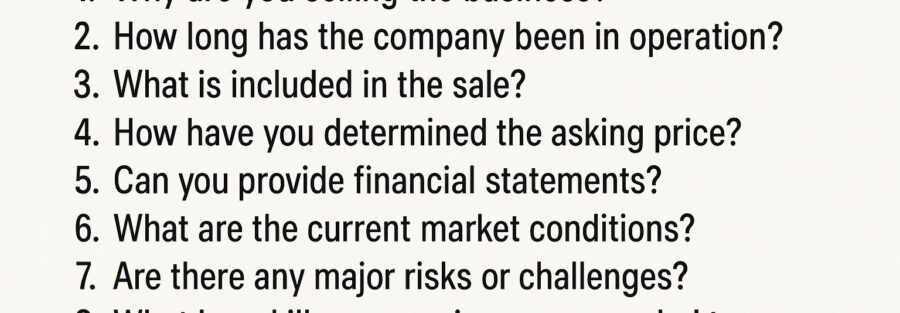
Top 10 Questions to Ask Business Seller
- Why are you selling the business?
Motivation reveals potential risks or opportunities—look for transparency and consistency in their answer. - What is the current revenue and profit breakdown?
Request detailed financials, including recurring revenue versus one-off sales. - Can you provide detailed customer or user metrics?
Understand user churn, retention rates, and segments driving growth. - What key processes or automations are in place?
For SaaS, ask about AI integrations, workflow automations, and codebase documentation. This is where productivity gains (or gaps) are often found. - Are there any outstanding legal or compliance issues?
Especially critical for AI and data-centric businesses. Ask for recent audits or compliance certifications. - Who are your main competitors—and what’s your unique edge?
Their perspective gives you insight into market positioning and potential challenges. - What are the biggest challenges or risks facing the business?
A candid seller will share both technical and market-related hurdles. - How dependent is the business on the current owner or team?
If the founder is the “secret sauce,” transition could be tough. Look for scalable processes and well-documented SOPs. - What’s included in the sale?
Clarify software licenses, customer lists, intellectual property, and any AI models or datasets. - Can I speak with key team members or customers?
First-hand insight from employees or top clients can validate (or challenge) the seller’s narrative.
Pro Tip: Turn Questions into Repeatable Prompts
- Document your questions in a shared workspace or AI tool for faster due diligence on future deals.
- Use frameworks like the Prompt Engineering Framework to standardize your inquiry process.
FAQ: Questions to Ask Business Seller
- What documents should I request from a business seller?
- Ask for financial statements, tax returns, contracts, customer lists, and any code or process documentation. Use our due diligence checklist for a full rundown.
- How can I verify the seller’s claims?
- Independently review financials and customer data, and consider third-party audits. Reference guides from SBA for best practices.
- What if the seller won’t answer some questions?
- Lack of transparency is a red flag. Consider walking away or negotiating protective contingencies into your offer.
- How do I assess the strength of a SaaS or AI business?
- Focus on recurring revenue, churn, codebase quality, and AI integrations. Read our SaaS valuation guide for more tips.
- Are there unique risks with AI-driven businesses?
- Yes—watch for data privacy issues, model ownership, and changing regulations. The National Law Review highlights current legal considerations.
Next Steps: Make Every Question Count
Taking a strategic approach to due diligence starts with asking the right questions to a business seller. By leveraging prompt engineering principles, you can streamline your process and avoid hidden pitfalls. For more frameworks and practical tools, explore other resources from EJ Bowen—your trusted partner in AI, productivity, and business strategy.